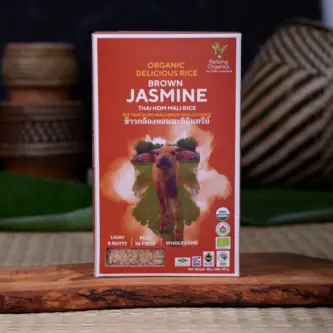

Organic Homnin Rice
Homnin is a traditional Thai black rice variety known for its deep black-purple colour when raw; dark purple when cooked. Hom” (หà¸à¸¡) means “fragrant,” and “Nin” (นิล) means “black” (literally “onyx” in Thai).
Its natural fragrance, and high nutritional values make it a popular choice among health-conscious consumers. Rich in anthocyanins: Contains anthocyanins, the same powerful antioxidants found in blueberries, which help combat oxidative stress, reduce inflammation, and support heart health.
High in fibre and nutrient dense: High in fibre, which supports digestion and help you full longer. It’s also rich in iron, zinc, magnesium, and B vitamins, also support overall health, including red blood cell production and brain function.
Diabetes friendly: Its naturally low Glycemic Index (GI) helps regulate blood sugar levels, making it a great option for people with diabetes or those looking to maintain steady energy levels.
Organic Homnin Rice Cooking Instructions
We do not recommend using an Oven, Air Fryer or Microwave for this product.
Stove/Hob
- 1. Rinse a few times until the water is clear.
- Place 1 cup of rice in a saucepan.
- Add 8 cups of water. Bring to boil and stir occasionally
- Reduce heat and boil gently uncovered for 25 minutes.
- Remove from heat, drain, and keep covered for 5 minutes.
Rice cooker:
- Rinse a few times until the water is clear.
- 1 cup of rice : 2 cup of water.
- Cook automatically in rice cooker. When rice cooker switches to “keep warm”, stand for 5 - 10 minutes before serving.
Please note: All appliances have a personality of their own. Please adjust our heating guideline accordingly.
Organic Homnin Rice Ingredients
Organic wholegrain homnin rice 100%Organic Homnin Rice Nutrition Information
Nutrition Facts
Serving Size 45g
| Amount Per Serving | % Daily Value * |
| Total Fat 0.7g | 1% |
| Saturated Fat 0.5g | 3% |
| Amount Per Serving | % Daily Value * |
| Total Carbohydrates 16.7g | 6% |
| Dietary Fiber 2.7g | 10% |
| Protein 1.8g |
* The % Daily Value (DV) tells you how much a nutrient in a serving of food contributes to a daily diet. 2,000 calories a day is used for general nutrition advice.